Reimagining Industrial Spaces: Converting Warehouses into Human-Centered Hubs
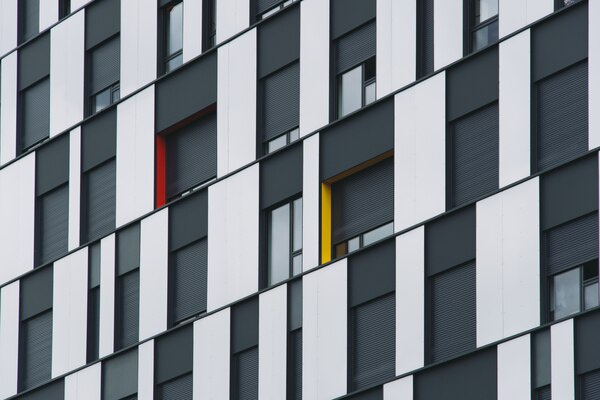
Across cities worldwide, warehouses stand as relics of past industrial booms: vast, underused shells on prime urban land. As economies shift toward services, creativity, and technology, these spaces are being reimagined not as storage boxes, but as vibrant, human-centered hubs. This transformation is reshaping neighborhoods, redefining work, and challenging traditional ideas of what buildings—and cities—are for.
From Monofunctional Boxes to Mixed-Use Ecosystems
Traditional warehouses were built for one function: storing goods efficiently. Human comfort, daylight, and aesthetics were secondary to logistics and economy of scale. The new paradigm flips that hierarchy. Instead of serving trucks and pallets, reimagined industrial spaces serve people first, while still allowing for production, experimentation, and collaboration.
A single converted warehouse can now house:
- Co-working and flexible office spaces
- Maker labs, fabrication shops, and prototyping studios
- Cultural venues, galleries, and performance spaces
- Cafés, shared kitchens, and food halls
- Fitness studios, community clinics, and childcare
- Urban farming, greenhouses, or vertical gardens
What once was a monolithic, single-purpose building becomes an ecosystem, where diverse uses reinforce each other. A startup prototype lab benefits from having a café and event space next door; a community sees value in a place that is active from morning to night, not just during work hours.
Designing for People, Not Just Programs
Converting a warehouse is not merely an architectural exercise; it is fundamentally about shifting priorities. A human-centered hub is designed around comfort, health, inclusivity, and meaningful social interaction.
Key design strategies include:
1. Daylight and Visual Connection
Warehouses often lack windows, or have small openings high above the floor. Reimagining them requires:
- Cutting new openings in facades to bring in daylight
- Adding skylights and light wells to illuminate deep floor plates
- Creating visual connections between levels and spaces so people see activity and feel connected, not isolated
2. Thermal and Acoustic Comfort
Industrial shells are notorious for being too cold in winter, too hot in summer, and echo-prone. Human-centered retrofits focus on:
- High-performance insulation and airtightness
- Efficient heating, cooling, and ventilation systems with good air quality and low noise
- Acoustic treatment—baffles, soft finishes, zoning—to prevent noise from workshops or events overwhelming quiet work areas
3. Flexibility and Adaptability
Instead of rigid layouts, human-centered hubs anticipate change:
- Modular partitions and movable walls allow spaces to shrink, grow, or switch function
- Shared infrastructure (power, data, ventilation) supports new uses without major reconstruction
- Large, open bays can host different activities over time—today a hackathon, tomorrow a market, next month an art festival
4. Intuitive Wayfinding and Legibility
Warehouses can be disorienting. A human-centered approach makes navigation intuitive:
- Clear routes, generous circulation spaces, and visual landmarks
- Layered signage that balances clarity with character
- Transparent or semi-transparent partitions, allowing people to “read” the building at a glance
Preserving Character While Adding Comfort
The appeal of industrial spaces lies partly in their raw character: exposed steel, brick walls, lofty ceilings, and overscaled doors create a distinctive atmosphere. Successful conversions respect and amplify this identity rather than erasing it.
Designers often:
- Retain and repair original structural elements, celebrating trusses, beams, and columns
- Reveal layers of history—old paint, signage, or patina—within a clean, safe environment
- Contrast raw materials (concrete, steel) with warm ones (timber, textiles, planting) to balance edge with comfort
This approach offers users a sense of authenticity. They inhabit a space that remembers its former life, connecting present activities—learning, making, collaborating—with the labor and industry that shaped the area.
Human-Centered Means Community-Centered
Human-centered design extends beyond individual comfort to social value. A converted warehouse can become a civic anchor if it genuinely responds to community needs and narratives.
This requires:
- Early engagement with local residents, organizations, and businesses
- Co-creation of programs: workshops, classes, markets, youth activities, healthcare, or legal clinics
- Affordable access: sliding-scale memberships, subsidized spaces for nonprofits, and support for local entrepreneurs
- Cultural representation through art, events, and storytelling that reflect the surrounding community
Without this deeper engagement, conversions risk becoming enclaves for a privileged few, accelerating displacement rather than building shared prosperity.
New Infrastructures for Work and Making
In the age of knowledge work and digital creativity, the boundaries between office, studio, workshop, and classroom blur. Warehouses are uniquely suited to host this convergence.
Reimagined industrial hubs often include:
- High-bandwidth digital infrastructure, media labs, recording studios, and VR/AR rooms
- Shared fabrication equipment: 3D printers, CNC routers, metal and wood shops
- Robotics, biotech, or clean-tech labs with appropriate safety and environmental systems
- Training programs and apprenticeships linking local residents to emerging industries
By colocating these functions, hubs can support the full innovation cycle—from idea to prototype to small-batch production—under one roof, while making these capabilities accessible to individuals and small teams who could never afford them alone.
Integrating Nature into Industrial Shells
Bringing nature into these formerly sealed, artificial environments is both a health intervention and a symbolic act of repair.
Common strategies include:
- Indoor planting, green walls, and biophilic materials to reduce stress and improve indoor air quality
- Courtyards, light courts, and roof terraces that create access to fresh air and outdoor rest areas
- Urban agriculture initiatives—rooftop farms, hydroponic systems, or community gardens—connecting people with food systems and stewardship
- Stormwater management features (green roofs, rain gardens) that reduce environmental impact and increase resilience
The result is a new type of industrial nature: not pristine or ornamental, but integrated with work, learning, and everyday social life.
Mobility, Access, and Urban Connectivity
Warehouses often sit in former logistics zones near rail yards, ports, or arterial roads, not in walkable centers. Turning them into human-centered hubs requires rethinking movement at multiple scales.
This includes:
- Safe, direct pedestrian and bicycle connections from neighborhoods and transit stops
- Adequate, well-designed bike storage and end-of-trip facilities
- Rethinking parking: prioritizing shared mobility, flexible use of surface lots, and gradual reduction of car dependence
- Designing entries that welcome pedestrians, not just vehicles—canopies, seating, lighting, and active ground floors
By improving access, these projects can stitch formerly disconnected industrial districts back into the urban fabric.
Equity, Gentrification, and Responsible Transformation
Converting warehouses can catalyze economic growth, but it also carries the risk of fueling gentrification. Human-centered design must reckon with who ultimately benefits.
Responsible transformation involves:
- Working with public agencies to secure long-term affordable space for community uses
- Structuring leases to protect small, local businesses and cultural organizations from rapid rent escalation
- Measuring social impact—jobs for local residents, access to training, participation in governance—and adjusting strategies accordingly
- Prioritizing inclusive hiring and procurement, especially from historically marginalized groups
A truly human-centered hub does not merely provide attractive amenities; it redistributes opportunities and resources more fairly.
Sustainability and Adaptive Reuse
From an environmental perspective, reusing existing structures is often more sustainable than building anew. Warehouses, with their robust frames and generous spans, lend themselves well to deep retrofits.
Key aspects include:
- Minimizing demolition to preserve embodied carbon in existing materials
- Upgrading envelopes and systems to significantly reduce operational energy use
- Integrating renewable energy—rooftop solar, geothermal systems where feasible
- Designing for circularity: specifying materials that are recyclable, modular, and easy to disassemble in the future
In this way, warehouse conversions not only create better places for people but also contribute to broader climate goals.
Governance, Management, and Cultural Life
Architecture sets the stage, but ongoing management determines whether a hub thrives. Human-centered spaces require governance models that are as thoughtful as their design.
Successful hubs typically:
- Curate a mix of tenants and programs to maintain diversity and avoid monocultures
- Support community-led events and initiatives, not just top-down programming
- Maintain open, transparent communication about decisions, policies, and changes
- Invest in hospitality: front-of-house staff, clear information points, feedback channels, and conflict resolution mechanisms
This operational layer transforms a building from a collection of spaces into a living institution.
The Promise of Reimagined Warehouses
Transforming warehouses into human-centered hubs is more than an architectural trend; it is a response to overlapping crises of vacancy, inequality, climate, and social fragmentation. These projects show that existing industrial fabric can be retooled to support new forms of work, culture, and community without erasing history.
The most successful examples are those that:
- Start from people’s needs and aspirations, not just market forecasts
- Balance preservation of character with high standards of comfort and accessibility
- Commit to equity, inclusion, and long-term community benefit
- Embed environmental responsibility from structure to systems
- Treat programming and governance as integral parts of design
As cities continue to evolve, the question is no longer whether old industrial spaces can be reused, but how imaginatively—and how justly—they can be transformed. Converting warehouses into human-centered hubs offers a powerful model: one where buildings are not simply occupied, but actively cultivated as platforms for shared, resilient urban life.